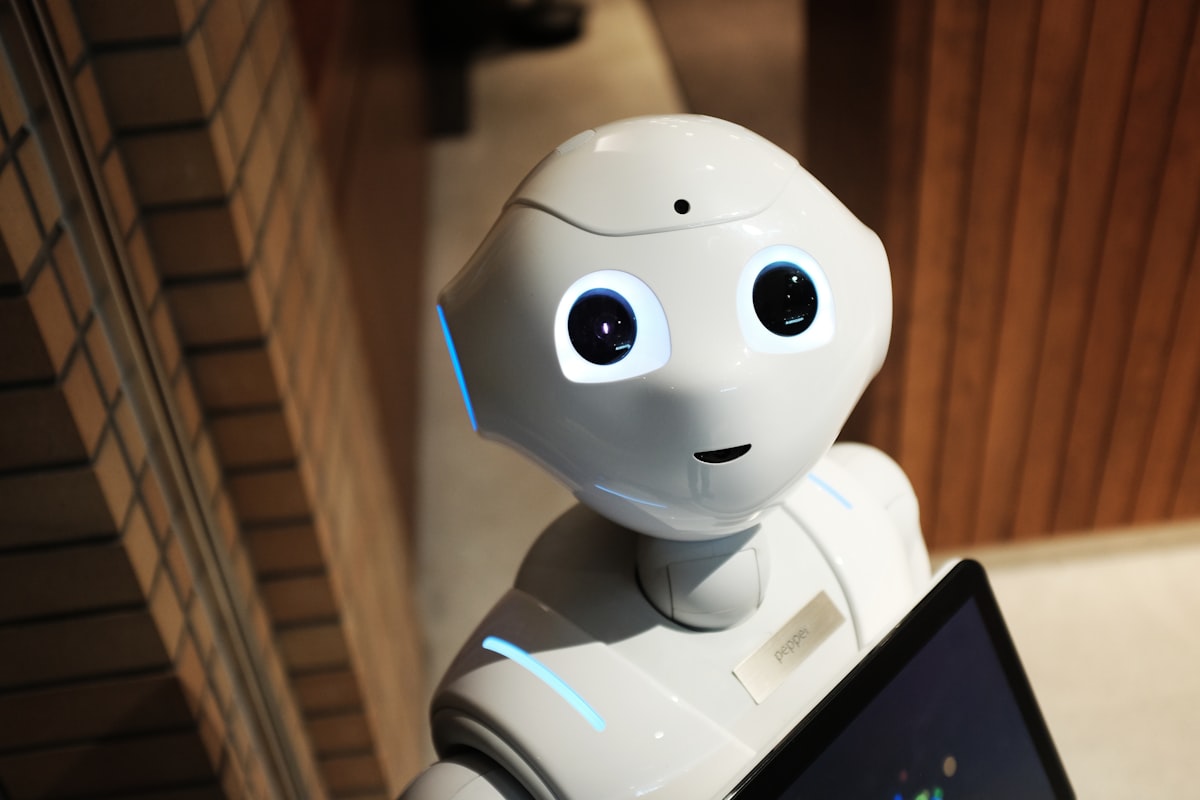
In 2026, artificial intelligence has evolved far beyond the chatbots and image generators that captured headlines just a few years ago. Today, AI is woven into the fabric of daily life—from personalized medical treatments to climate modeling that saves ecosystems. This transformation marks a new era where AI is not just a tool but a collaborative partner, reshaping industries, creativity, and human interaction. Let's explore the key areas where AI is making its most profound impact.
Beyond the Hype: AI's Real-World Integration
The initial frenzy around AI has settled into a more mature, integrated landscape. Companies are no longer asking "Should we use AI?" but "How can we use AI responsibly and effectively?" This shift is visible across multiple sectors, each harnessing AI in unique ways.
Healthcare: From Diagnosis to Personalized Treatment
One of the most heartening applications of AI is in healthcare. Advanced machine learning models now analyze medical images with accuracy surpassing human radiologists. More importantly, AI systems are personalizing treatment plans by analyzing a patient's genetic makeup, lifestyle, and medical history. In 2026, AI-driven drug discovery has cut the time to bring new medications to market by 40%, significantly reducing costs and saving lives. Patient monitoring systems using natural language processing can detect early signs of mental health issues, enabling timely intervention. For a deeper look at how these trends are evolving, check out The Next Frontier: Future Trends Reshaping Society and Technology.
Autonomous Everything: Beyond Self-Driving Cars
While self-driving cars continue to make strides, AI's role in autonomy has expanded dramatically. Drones now manage crop health and deliver medical supplies to remote areas. Warehouse robots coordinate seamlessly with human workers, reducing injury and improving efficiency. In urban planning, AI models simulate traffic flows and optimize public transit routes, leading to less congestion and lower emissions. The vision of a fully autonomous world is still in progress, but 2026 marks a significant leap. For insights on what's coming next, read Tomorrow's Horizon: Key Trends Shaping Our Future.
Creativity in the Age of AI
Perhaps the most debated frontier is AI's role in creativity. Far from replacing human artists, AI has become a co-creator, offering suggestions, generating variations, and breaking creative blocks.
Art, Music, and Literature
Painters use AI to experiment with styles and color palettes. Musicians collaborate with AI tools that understand chord progressions and emotional tone. Writers employ AI to draft dialogue or explore plot twists. In 2026, a novel co-written by a human and an AI won a prestigious literary award, sparking conversations about authorship and creativity. The key is human direction; AI provides raw material, while humans imbue it with meaning and emotion.
Ethical AI: A Central Pillar
With great power comes great responsibility. In 2026, ethical considerations are at the forefront of AI development. Governments worldwide have enacted regulations requiring transparency, fairness, and accountability in AI systems.
Bias and Fairness
Bias in AI remains a critical challenge. Companies now employ diverse teams to audit datasets and algorithms, striving to ensure that AI does not perpetuate societal inequalities. Technologies like explainable AI (XAI) have become standard, allowing users to understand why a model made a particular decision. This transparency builds trust and helps identify biases early.
Privacy in a Data-Driven World
As AI systems require vast amounts of data, privacy concerns have intensified. New techniques such as federated learning, where models train on decentralized data without sharing raw information, are gaining traction. Users have more control over their data, and companies are incentivized to adopt privacy-preserving technologies. For more on the ethical dimensions of AI and other trends, see The Next Wave: How Quantum AI, Ambient Computing, and Human-Centric Design Will Redefine Tomorrow.
The Future of Work: Collaboration, Not Replacement
Fears of AI replacing jobs have been tempered by realities of augmentation. In 2026, AI handles routine tasks, freeing humans for higher-level thinking, creativity, and emotional engagement.
Upskilling and New Roles
New job categories have emerged: AI trainers, ethicists, prompt engineers, and integration specialists. Educational systems are adapting, teaching students how to work alongside AI rather than compete with it. Traditional roles are evolving—a doctor now diagnoses with AI assistance, a teacher uses AI to personalize lessons, and a designer collaborates with AI on prototypes. The global economy is witnessing a shift from manual labor to knowledge work, with AI as a catalyst.
Looking Ahead: 2027 and Beyond
As we move past the midpoint of this decade, AI's trajectory shows no signs of slowing. Research into quantum AI promises to solve problems currently intractable, like modeling complex protein folding or optimizing global supply chains. Yet, the focus remains on human-centric design: AI that adapts to our needs, respects our privacy, and amplifies our capabilities.
In summary, 2026 is a year of integration and maturation for AI. It's no longer about what AI can do in isolation, but what humans and AI can achieve together. The future is collaborative, and the possibilities are boundless.