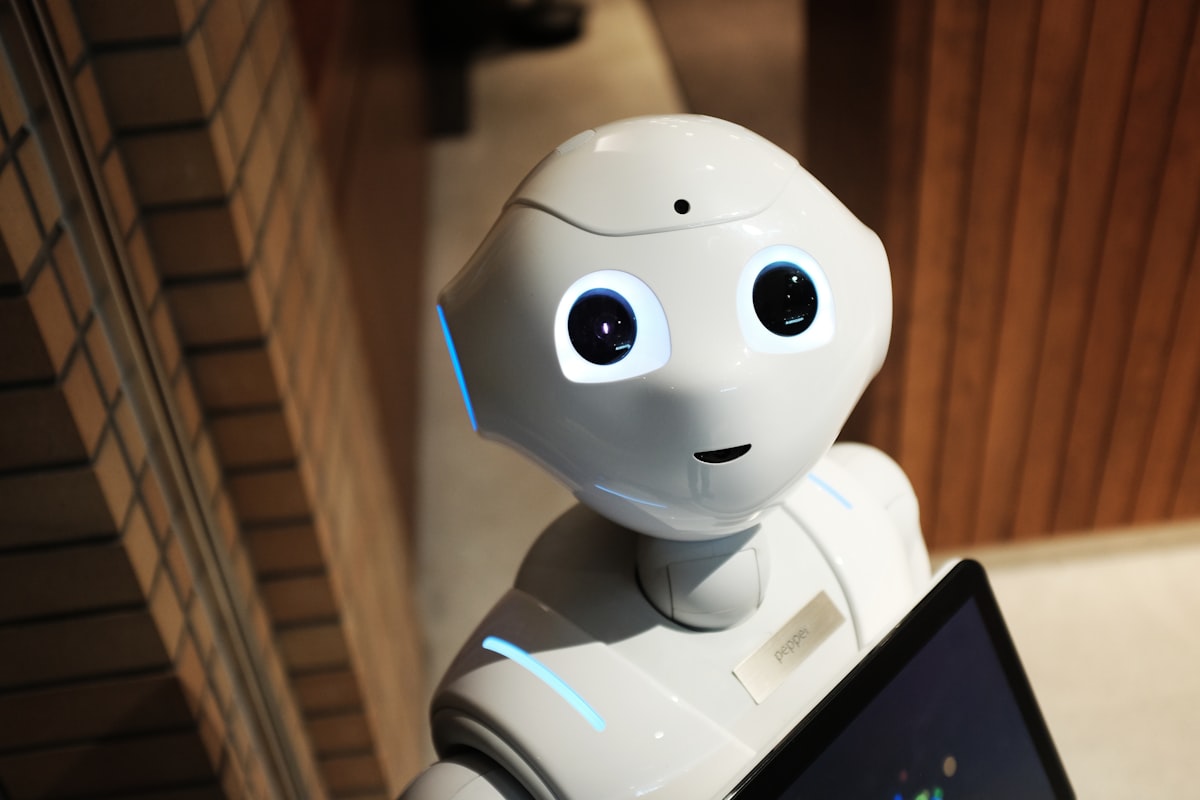
Artificial Intelligence is no longer a distant dream of science fiction. It has woven itself into the very fabric of our daily lives, from the moment we unlock our phones with facial recognition to the personalized recommendations that shape our online experiences. In 2026, AI is not just a tool; it is an integral collaborator, an invisible partner that amplifies human potential across every sector.
The New Landscape of Work and Creativity
One of the most profound shifts has been in the realm of work. AI-driven automation is no longer confined to repetitive tasks. Large language models and generative AI systems now assist in complex creative processes—drafting legal documents, composing music, designing architectural blueprints, and even writing code. This is not about replacement but augmentation. As AI tools become more sophisticated, the demand for uniquely human skills—critical thinking, emotional intelligence, and ethical judgment—has never been higher.
The Rise of Human-AI Collaboration
In the modern workplace, the most effective teams often include both human and AI members. For instance, developers now use AI pair programmers that can suggest code snippets, catch bugs in real time, and even refactor entire codebases autonomously. This synergy is accelerating software development cycles, allowing teams to focus on higher-level architecture and innovation. As noted in Web Development in 2026: Trends, Tools, and Best Practices for Modern Developers, the integration of AI into the development workflow is not just a trend—it is the new standard.
Generative AI in the Creative Arts
Generative AI has democratized content creation. Artists, writers, and musicians leverage AI to overcome creative blocks, explore new styles, and produce work that blends human intent with machine-generated possibilities. From AI-generated paintings that sell at auction to music tracks that adapt to a listener's mood, the boundaries between human and machine creativity are blurring. Yet, this raises important questions about authorship and authenticity—conversations that are shaping legislation and industry standards.
Transforming Industries with Intelligent Automation
Beyond the creative and tech sectors, AI is revolutionizing traditional industries. Healthcare, finance, manufacturing, and transportation are being reimagined through intelligent automation and predictive analytics.
Healthcare: From Diagnosis to Drug Discovery
AI-powered diagnostic tools now surpass human accuracy in detecting diseases like cancer and retinal disorders from medical imaging. Natural language processing is being used to analyze patient records and suggest personalized treatment plans. Moreover, AI is accelerating drug discovery, simulating molecular interactions to identify promising compounds in weeks rather than years. The Edge AI Revolution is especially transformative in healthcare, enabling real-time analysis on wearable devices and in remote clinics where cloud connectivity is limited.
Finance: Smarter Algorithms, Ethical Challenges
In finance, AI algorithms manage high-frequency trading, detect fraud with near-perfect accuracy, and offer robo-advisory services that outperform traditional portfolio managers. Yet, the same tools can introduce systemic risk if not properly understood. Black-box models, where even their creators cannot fully explain decisions, pose challenges for regulatory compliance and trust. As a result, explainable AI (XAI) has become a critical field of research and a requirement in many jurisdictions.
Manufacturing and Supply Chain
Smart factories equip robots with computer vision and reinforcement learning to perform assembly tasks with unprecedented precision. Predictive maintenance, fueled by IoT sensors and AI analytics, minimizes downtime and extends equipment life. Supply chains have become resilient and self-optimizing, dynamically rerouting shipments based on weather, geopolitical events, or demand spikes. This level of autonomy requires robust governance and continuous human oversight.
The Ethical Imperative: Building AI with Responsibility
As AI's influence expands, so does the urgency of addressing its ethical implications. Bias in AI systems, data privacy, job displacement, and the potential for misuse are not hypothetical—they are real issues demanding action today.
Fairness and Bias
AI models trained on historical data can perpetuate systemic biases, leading to discriminatory outcomes in hiring, lending, and law enforcement. Researchers are developing techniques to detect and mitigate bias, but there is no silver bullet. Diverse teams and inclusive data sets are essential, as is ongoing auditing of deployed systems. Initiatives like the Partnership on AI are fostering collaboration across industry, academia, and civil society to establish best practices.
Privacy in an AI-Driven World
AI's appetite for data challenges traditional notions of privacy. Techniques such as federated learning, differential privacy, and homomorphic encryption allow models to learn from decentralized data without exposing individual records. However, these methods are not yet widely adopted. Legislation like the EU's AI Act sets a precedent for regulating high-risk applications, emphasizing transparency and user control.
The Future of Work and Reskilling
Concerns about job displacement are valid, but history shows that technological revolutions create new categories of work. The challenge is retooling the workforce for an AI economy. Educational systems are integrating AI literacy from primary school through university, and corporate retraining programs are becoming standard. Human-centric skills—empathy, ethics, and entrepreneurship—are being prioritized alongside technical expertise.
The Convergence with Other Technologies
AI does not exist in isolation. Its most profound impacts come from convergence with other emerging technologies.
AI and the Metaverse
In virtual and augmented realities, AI powers realistic avatars, generates immersive environments on the fly, and enables natural interactions through speech and gesture recognition. As explored in From Metaverse to Mindful Tech, the metaverse promises new spaces for work, play, and social connection, but also raises concerns about digital addiction and privacy. Responsible design and mindful adoption are crucial.
AI at the Edge
Processing data locally on devices—edge AI—reduces latency and bandwidth needs while enhancing privacy. Smart cameras, voice assistants, and autonomous vehicles all rely on edge inference. The Edge AI Revolution is enabling real-time intelligence in scenarios where cloud dependency is impractical or insecure, from industrial robots to consumer gadgets.
AI and Quantum Computing
Quantum computers, once purely theoretical, are now tackling problems beyond the reach of classical machines—simulating molecules for drug discoveries, optimizing large-scale logistics, and cracking current encryption methods. While still early, the synergy between AI and quantum computing could unlock breakthroughs in material science, climate modeling, and fundamental physics. For a deeper dive, see The Quantum Leap: How Quantum Computing Will Revolutionize Technology.
A Roadmap for the Future
Living in an AI-driven world demands that we stay informed and proactive. Here are some guiding principles for individuals and organizations:
- Embrace Lifelong Learning: The pace of change requires continuous upskilling. Engage with online courses, workshops, and professional communities.
- Demand Transparency: Use tools and services that explain how their AI decisions work. Support companies that prioritize ethical AI.
- Promote Inclusivity: Ensure AI systems are tested across diverse demographics and use cases. Diversity in AI development teams is not just fair—it leads to better products.
- Advocate for Regulation: Support thoughtful policies that balance innovation with protection of individual rights and societal well-being.
Conclusion
Artificial Intelligence in 2026 is a powerful, ever-present force reshaping our world. It offers remarkable opportunities to enhance human creativity, efficiency, and well-being, but it also demands vigilance, ethics, and collaboration. As we stand at this inflection point, the choices we make today will determine whether AI becomes a tool for inclusive prosperity or a source of new divides. The future is not predetermined; it is ours to build.