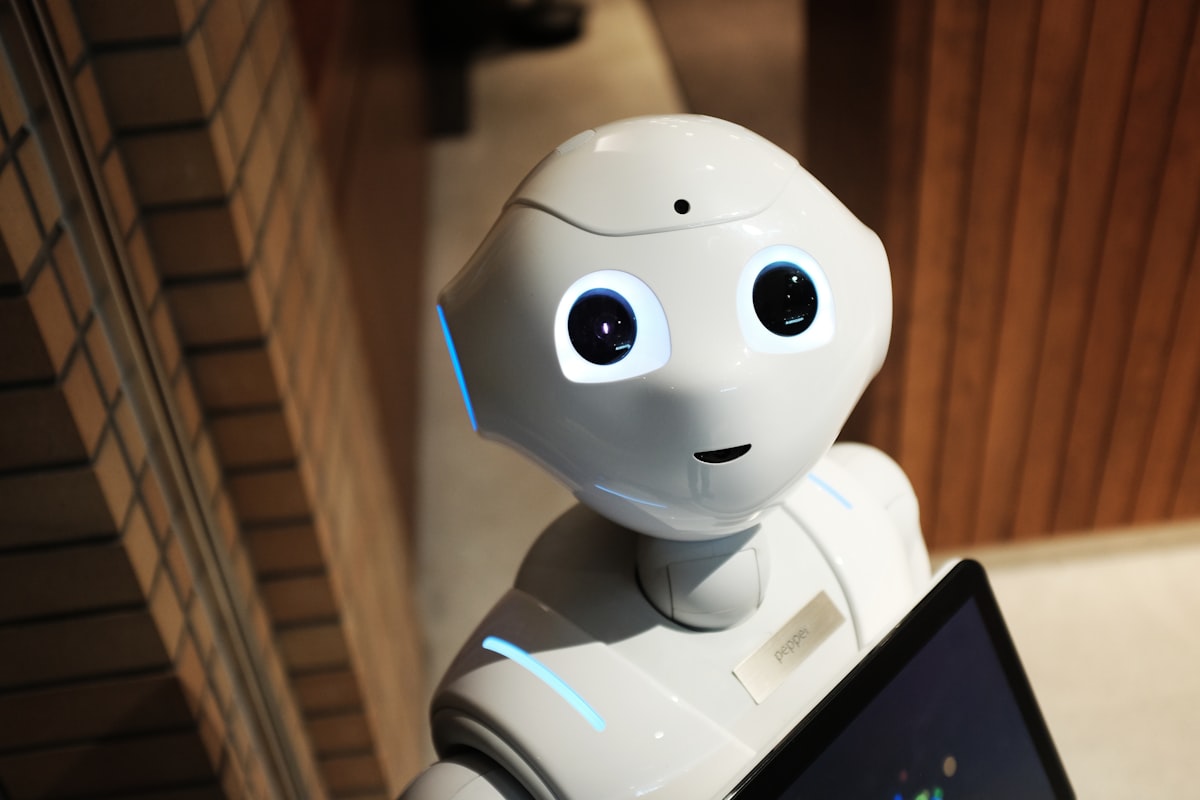
Introduction: The Quiet Revolution
Artificial intelligence is no longer a distant futuristic concept—it is the invisible infrastructure of modern life. From the moment we unlock our phones using facial recognition to the personalized recommendations on streaming platforms, AI works tirelessly behind the scenes. In 2026, its influence has deepened, seeping into healthcare, finance, education, and even creative industries. This article explores how AI is fundamentally reshaping our world, often in ways we do not notice.
How AI Is Transforming Industries
Healthcare: From Diagnosis to Personalized Treatment
AI's impact on healthcare is profound. Machine learning models now analyze medical images with accuracy rivaling—and often surpassing—human radiologists. In 2026, AI-driven diagnostics have become standard in hospitals, reducing misdiagnosis rates. Beyond diagnosis, AI enables personalized medicine by analyzing genetic data to tailor treatments for individual patients. Algorithms predict disease progression, recommend lifestyle changes, and even assist in robotic surgeries.
Finance: The Intelligent Economy
In finance, AI powers fraud detection systems that flag unusual transactions in real time. Trading algorithms execute millions of orders per second, responding to market changes faster than any human. Robo-advisors manage retirement portfolios, while natural language processing analyzes news sentiment to forecast stock moves. The financial sector has become a testbed for AI's ability to handle complex, high-stakes decisions.
Education: Personalized Learning at Scale
AI tutors now adapt to each student's learning pace, offering customized exercises and feedback. In 2026, schools use AI to identify at-risk students early, providing targeted interventions. Virtual reality simulations, powered by AI, create immersive learning environments for history, science, and vocational training. This democratizes education, making high-quality tutoring accessible to students worldwide.
AI and the Future of Work
Augmented Intelligence: Collaborating with AI
Contrary to fears of mass unemployment, AI is increasingly seen as a collaborator rather than a replacement. Augmented intelligence—where AI enhances human capabilities—is the dominant paradigm. For example, customer service agents use AI to quickly retrieve relevant information, doctors leverage AI for second opinions, and programmers rely on AI assistants to write and debug code. This symbiotic relationship boosts productivity and creativity.
For developers, the rise of AI tools is reshaping their daily workflow. While AI can generate boilerplate code and suggest optimizations, human oversight remains crucial. As discussed in The Modern Programmer: Navigating Code, Culture, and the Future, the successful programmer in 2026 is one who embraces AI as a partner while honing uniquely human skills like system design and ethical reasoning.
New Job Roles Emerge
AI is also creating entirely new career paths. Prompt engineers, AI ethicists, and data storytellers are roles that did not exist a decade ago. Companies now hire AI trainers to refine models, and compliance officers to ensure algorithms follow regulations. The World Economic Forum predicts that AI will create 97 million new jobs by 2025, a trend that has only accelerated through 2026.
Ethical Considerations and Challenges
As AI becomes more pervasive, ethical questions arise. Bias in training data can lead to discriminatory outcomes, particularly in hiring, lending, and criminal justice. In 2026, there is growing demand for transparent algorithms and explainable AI. Governments are crafting regulations to ensure fairness, accountability, and privacy. Organizations must invest in ethical AI practices to maintain public trust.
Another challenge is the environmental impact of training large AI models. The energy consumption of data centers rivals that of small countries. Researchers are developing more efficient models and using renewable energy sources to mitigate this. Sustainable AI is not just an option—it is a necessity.
AI in Everyday Life: The Unseen Hand
Beyond industry, AI shapes our daily routines. Smart home devices learn our preferences, adjusting lighting and temperature automatically. Navigation apps use real-time traffic data to optimize routes. Content recommendation engines curate our news feeds and entertainment. These conveniences are seamless because AI operates in the background, making life easier with minimal friction.
Yet, this convenience comes with trade-offs. Privacy concerns mount as companies collect vast amounts of personal data to train their models. The balance between utility and privacy remains a delicate dance. As noted in Artificial Intelligence Beyond Automation: The New Era of Augmented Intelligence, the key is designing systems that respect user autonomy while delivering value.
The Next Frontier: General AI and Beyond
While current AI excels at narrow tasks, the pursuit of Artificial General Intelligence (AGI)—a machine that can perform any intellectual task a human can—continues. In 2026, AGI remains theoretical, but advances in neural architecture search and reinforcement learning bring us closer. Experts predict that AGI could emerge within the next decade, raising profound questions about consciousness, rights, and the future of humanity.
Meanwhile, AI is expanding into new frontiers like quantum machine learning and neuromorphic computing. These technologies promise to solve problems intractable for classical computers, from drug discovery to climate modeling. The pace of innovation shows no signs of slowing.
Conclusion: Embracing the AI-Augmented Future
Artificial intelligence is the unseen hand reshaping our world, from the mundane to the monumental. Its influence is pervasive, yet often invisible. As we move further into 2026 and beyond, our task is not to resist this change but to guide it responsibly. By prioritizing ethics, fostering collaboration between humans and machines, and investing in education, we can harness AI's potential for the benefit of all.
The future is not about AI versus humans—it is about AI and humans together, creating a world that is smarter, more efficient, and more compassionate. The journey has only begun.